
06 March 2026
Three Notes from Tehran Under Attack
Note 1
We live between fear and hope. My fears are stronger than my hopes.
Every morning I wake up to the sound of explosions and fighter jets. At night I fall asleep listening to the same sounds. Around five in the morning another blast wakes me up. Then again at eight. At nine. The explosions rarely stop for more than two or three hours.
All day I keep my ears alert for the sound of jets. When I hear an explosion, I go up to the roof to see where it hit. After each blast I call friends who live nearby to make sure they are safe. When we get a hit somewhere nearby, they call me. We are all constantly thinking: what is going to happen to us?
Daily life has almost disappeared. My sleep is broken into small pieces. I sleep no more than three or four hours in a whole day. The sound of explosions stays in my ears. I cannot sleep properly. I even take medication, but it feels as if the sleep switch in my brain has been turned off. The only good thing is that since I barely sleep, I do not have nightmares.
I have no appetite. Eating is difficult. I spend most days at home. If I go outside, I come back very quickly. The streets are empty and silent. Most shops are closed.
Some of of my friends who have children left Tehran on the first day. One friend with a child stayed. Her child had severe anxiety earlier, during the mass protests, after learning that many people had been killed. Even medication did not stop his nervous movements. Strangely, since the war started, he has improved greatly. The child still hears the jets and gets scared, but something has changed. These days my friend often invites relatives’ children to their house, or takes her child to theirs, so the kids can play together and forget the war for a while.
In our neighbourhood some people leave food and water outside for stray animals. Because of that there are many dogs and cats around the houses. I have not seen any animals injured. But they are exposed to the explosions and the jets like we are, and they must be terrified. A friend who has a dog says her dog trembles constantly now.
Social life has shrunk. Most people stay inside their homes. Some families gathered together early on and are living together in one place. Others meet the same two or three people for an hour or two each day and then return home. Mostly we check on each other by phone.
The internet is cut off, so messaging apps do not work. We exchange news by calling each other. We ask where the bombs fell. Everyone shares whatever information they have. News travels from mouth to mouth.
Most neighbourhoods still have at least one supermarket and one bakery open. Online shopping has completely stopped. The apps still work, but the stores no longer sell online, probably because there are no delivery drivers. Prices have already gone up. Yesterday I went to a grocery store and every item I bought cost at least fifty thousand tomans more than before.
Only a few restaurants are open. On a street where I often go, there were seven or eight restaurants. Now only one is open. On another street full of cafés, only two or three remain open.
The streets feel empty, cold, and frightened. Security patrols are everywhere. Armed forces stand in the streets, sometimes with armoured vehicles. Sometimes they stop in the middle of highways. At one point they closed part of Niayesh Highway and stationed patrols there.
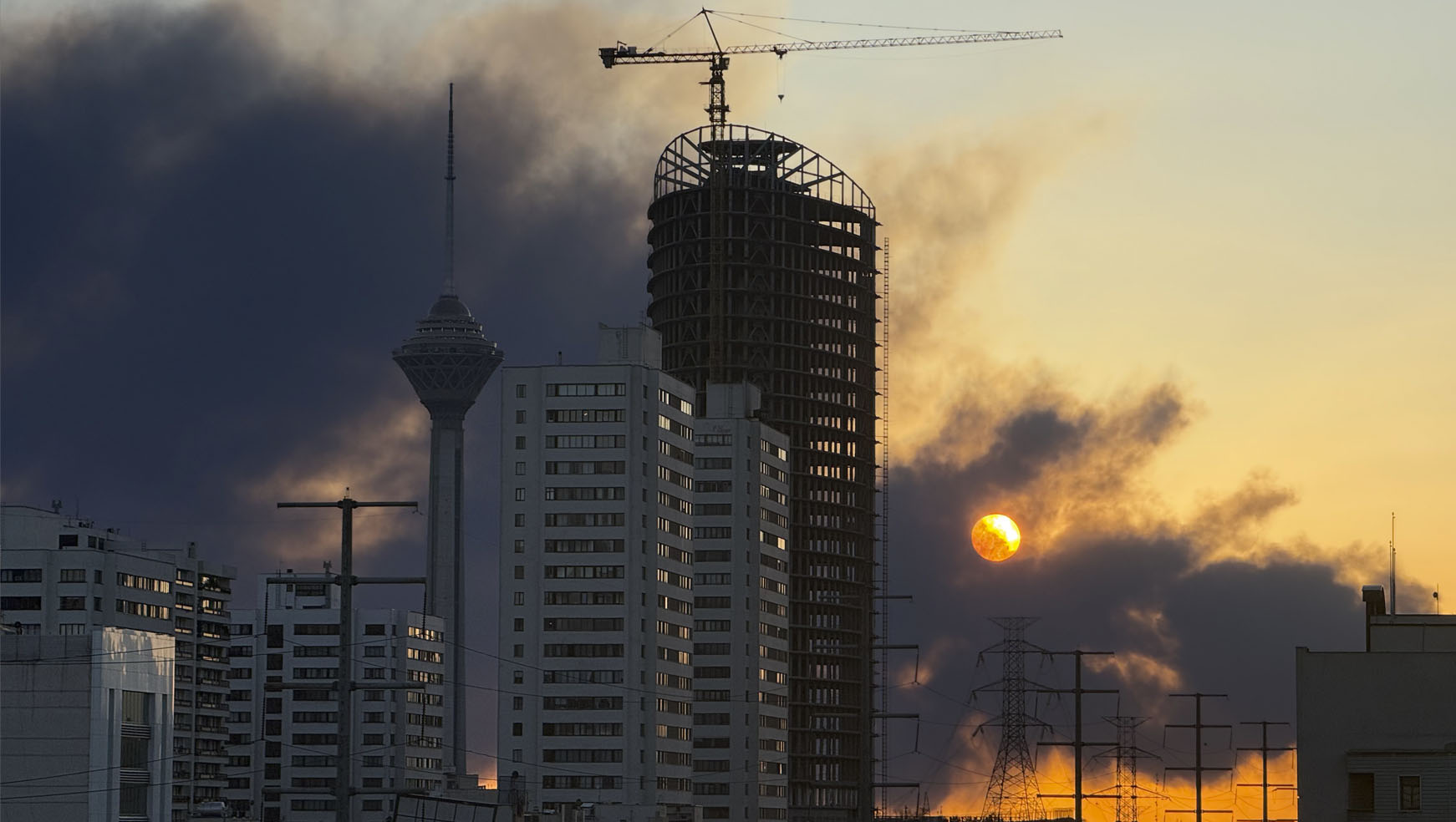
When I hear the jets, I feel a wave of panic. But when I go up to the roof to see where the explosion happened, the panic somehow becomes less intense. I want to see what is happening to us. Somehow that makes it easier to bear. Columns of smoke rise across the city.
Our windows are double-glazed and we did not tape them. Some of my friends taped theirs. Some people are cautious. Others simply accept whatever happens.
Air raid sirens sound in some parts of the city, but they feel meaningless. We have no shelters to go to. There is nowhere except our homes. Some local websites publish advice about what to do during an attack, but I doubt many people read them. People mostly rely on each other and share their own experiences. They trust each other more than they trust what the government says.
Compared to the twelve-day war, this war is much more intense. The attacks are stronger. They happen at more hours of the day. Everything feels unpredictable. Yet fewer people around me have left Tehran this time. Most people have stayed home, even though the explosions are stronger and more widespread.
We mostly watch Persian-language satellite TV channels from abroad. I also read domestic news agencies to see what is happening inside the government, for example the question of who might succeed Khamenei. For information about which parts of the city were hit, I check domestic reports. But for most other news I rely on foreign Persian-language television. Their reports feel more accurate. I also follow reports there about Iran’s attacks on other countries.
Nowruz is coming soon, but no one is in the mood. In fact, it is the one thing we don't talk about. Many homes are covered in dust from the explosions. People spend their days cleaning the smoke and dirt left by the war. Spring cleaning and Nowruz celebrations feel very far away.
Note 2
For now, I am still alive. Our neighbourhood has not been hit. It seems there are no government buildings nearby.
In the last five or six days I have only left the house twice. The endless attacks, the destruction, the fire and smoke are one thing. But groups of government supporters driving through the streets on motorcycles and cars, shouting Allah-o-Akbar and Heydar Heydar, are unbearable. As if they had not already brought enough misery upon us.
Sometimes I think it is a blessing that my husband died last year and did not live to see this. I also wonder how I could have cared for him alone in this situation. He had become paralyzed and bedridden.
For now, we still have water and food. I have not yet touched the emergency supplies I stored for difficult days. I have very kind neighbours. They worry about my age and that I live on my own. They check on me often so I will not feel lonely. They ask if I need anything and offer to bring it for me.
As long as the water and electricity still work, I thank God.
I keep asking myself how we ended up here. How did Iran come to this?
But sometimes, when the air smells like spring, I find myself having more hopeful thoughts. If we ever emerge from this hell, perhaps new horizons will open for Iran. My own life is nearing its end—perhaps it will be for the younger ones.
Note 3
So far, in these first days of war, daily life feels strangely normal.
We stay at home most of the day. There is no internet. Satellite channels are heavily jammed. Until today we had no secure internet access at all. Today, after much effort, a VPN finally connected.
We do not use domestic apps either. We keep in touch by text message and phone calls. We rarely see each other in person.
All shopping malls are closed. Small neighbourhood shops are still open, but people only go outside when absolutely necessary. Hardly anyone shops. Apart from grocery stores, most shops have no customers.
For now, the supermarkets still have everything. But prices have been rising for some time, and they continue to rise every day. I have not gone shopping during these five days, so I do not know exactly how much more expensive things have become.
The city looks quiet. The air is unusually clean. It feels as if those responsible for pollution are busy with war and do not have time to burn fuel and darken the sky.
But the streets are full of armed officers. They patrol constantly on foot, on motorcycles, and in cars. Sometimes they move in long convoys. They shout and make noise.
When air raids begin, we simply listen to the sounds. We do not take shelter, because there is nowhere to go. We did not tape our windows either. There are no sirens before attacks. No warnings. No instructions.
We are certain these difficult conditions will continue until Nowruz. Still, we endure.
People are much more prepared this time than during the twelve-day war. Mentally and physically we were already expecting something like this. Far fewer people left the city. The sounds frighten people less. Rumours about famine frighten people less.
Satellite channels are our only connection with the outside world. Sometimes we read domestic news too, mostly to laugh at the lies. At the same time, we know that every news outlet shows events through its own lens. Every channel filters and selects what it presents. We do not fully trust any of them.
Some people even do spring cleaning these days. Everything is closed and there is nowhere to go, so cleaning the house becomes a way to stay busy and distract ourselves from the news. The weather is actually very pleasant and spring-like.
Sometimes I tell myself that in normal years we stopped working about a week before the Nowruz. This year we simply stopped three weeks earlier. It will pass. We will endure until it ends.
Economically, however, things are very different. Shops are missing the important Nowruz shopping. Many people have not received the payments they expected at the end of the year. Businesses have not collected what they were owed.
The new year will probably begin under difficult economic conditions. Still, many of us remain hopeful. Even in this situation we hope for a bright and free future for Iran.