

08 March 2026
Tehran at War: No Shelters, No Sirens. But the Cameras Still Work
Ziba Soltani
The last thing I did on Friday night, before the war began, was sit at my desk and write a To Do list for the coming week. I had been postponing two tasks for months. I had promised myself I would deal with at least one of them before Nowruz. The list was not long. I wanted to be realistic. Just ordinary things: office work, visit my mother three times, a pedicure before the New Year, and two meetings.
On Saturday morning a message from N, in California, woke me. The war had started.
“How far is your house from the Leader’s compound?” I live far from Pasteur Street. I had not even heard the explosions.
On Instagram the first story I saw showed a huge column of smoke. The caption read: This just happened right in front of me. The next story showed another place in the city, another white column rising between cars and buildings.
That was how the war entered my life.
Messages moved quickly through family and friends’ groups. Where are you? Are you safe? Soon we confirmed that everyone was fine. The same sentence appeared again and again in the messages: “So they finally did it.”
I grew up during the eight-year war. I also lived through the twelve-day war. But I always felt sorry for the people of Iraq. After their long war they went through several more. Now it seemed we were heading toward the same fate.
In the days before the war, people were searching for bottled water and canned food. Some companies were preparing for power cuts and bought generators. Until a friend told me her workplace had purchased one, I had not even thought about electricity. I had only been worried about water. But she was right. If the power plants and infrastructure were bombed, what would we do?
I remembered a book called Baghdad Diaries by the Iraqi artist and writer Nuha al-Radi. It is a journal she kept during Iraq's war with Kuwait. She writes about the misery of war through the small details of everyday life, the things that rarely appear in war reports.
In one passage she writes that the electricity had been out for two days and the whole neighbourhood smelled of kebab. When I first read it, I thought: like Iranians, people in Iraq try to enjoy life even in the middle of disaster. But a few pages later I understood. Families were grilling the meat in their refrigerators, because without electricity it would spoil. They had no choice. What a bitter barbecue.
Our situation is bitter in another way. Even if the power goes out, there will be no barbecue. Meat disappeared from many Iranian tables long ago. Chicken too, more recently. The economy had already begun destroying people’s lives before the war even started.
On television, Donald Trump tells people in Iran to stay home. But people are still trying to get home through terrible traffic. The explosions reach our neighbourhood now. The street looks apocalyptic. Some people are running. Cars are stuck in traffic. The sound of fighter jets overhead is deafening. Explosions come from near and far. Columns of smoke rise in different corners of the sky. Drivers lean on their horns.
I run to the neighbourhood grocery store. But the shelves are already empty. Others arrived before me. Fear settles in my chest. Mr Cyrus apologizes. He says he will restock everything tomorrow. As if the empty shelves are somehow his fault.
S. still hasn't got back home. My thoughts are with my mother, alone in her apartment. I pray no missile has hit her building. Or if it has, I hope she was sleeping on her left side—the ear that cannot hear anything.
Phones stop working.
I pace between the living room and the kitchen. My heart is pounding. The same sentence keeps repeating in my head: So they finally did it.
Missiles. Explosions. Smoke. Breaking-news banners on BBC Persian and Iran International. The war has begun. No one knows much. Only that several cities have been hit by airstrikes and missiles. I scroll endlessly through Twitter and Instagram. Tehran. Kermanshah. Tabriz. Shiraz. Chabahar.
I bought nothing for wartime. No bottled water. No canned food. I always told myself: most people cannot store supplies. I am like everyone else, why should I do otherwise? Now I regret it.
F. comes back. He says no shop has anything left to sell. The bombing does not stop. Air defences are silent.
Across the street our neighbours are leaving. The whole family loads their car in a rush and drives away.
Finally S. arrives. I ask him to come with me to bring my mother here. When I open her door, my sick mother is standing in the middle of the apartment, confused. “These upstairs neighbours have gone too far,” she says. “All this noise. The ceiling is going to collapse on my head.”
By evening the traffic is gone. Only a few cars move through the streets. For an hour or so the explosions stop. But reports from TV channels abroad say that many cities are attacked.
A few neighbours are talking outside in the street. One says the Leader’s compound was hit and Khamenei has been killed. Another replies: do you really think he is still there? They have hidden him in a hundred holes.
Without the sound of jets overhead, that conversation might have gone on for hours.
At night my mother insists on returning home. This is Alzheimer - she keeps asking why she is here. She says she has things to do and must go back.
A news ticker on television says there are signs Khamenei may no longer be alive. An hour later cheering and whistles fill the neighbourhood. Someone screams a long cry of joy from deep in the throat: “O' God! O' God”
A television channel reports that Netanyahu says there are “growing signs” that Iran’s Supreme Leader may have been killed in the joint Israeli-American strikes.
A woman shouts from her window: “O children, may your souls be blessed!” A neighbour shouts insults back at her — the same man who once threatened neighbours during the protests.
The fighter jets return. Explosions again.
An hour later a pickup truck with loudspeakers drives into our street playing a revolutionary song: “Army of the Mahdi, we are ready.” The local Basij wants to send a message: do not celebrate too soon. We are still here.
The second day of the war is exhausting. Jets and missiles never stop. We spend most of the day in the hallway. There is nowhere to go. Nothing to do.
In the afternoon things quiet down a little. I take my mother back home. She is restless. She says strangers have come into her house and she must go back to check. Sometimes she says my grandfather called and asked why she had not come home. My grandfather died twenty-three years ago.
I choose to protect her mind rather than her body. In truth, nowhere in this city is safe.
The streets are empty, but not in the same way as during the pandemic. Columns of smoke rise across the skyline. It feels like driving through a war film.
People have stayed in Tehran, because there is nowhere else to go. No place in Iran is safe.
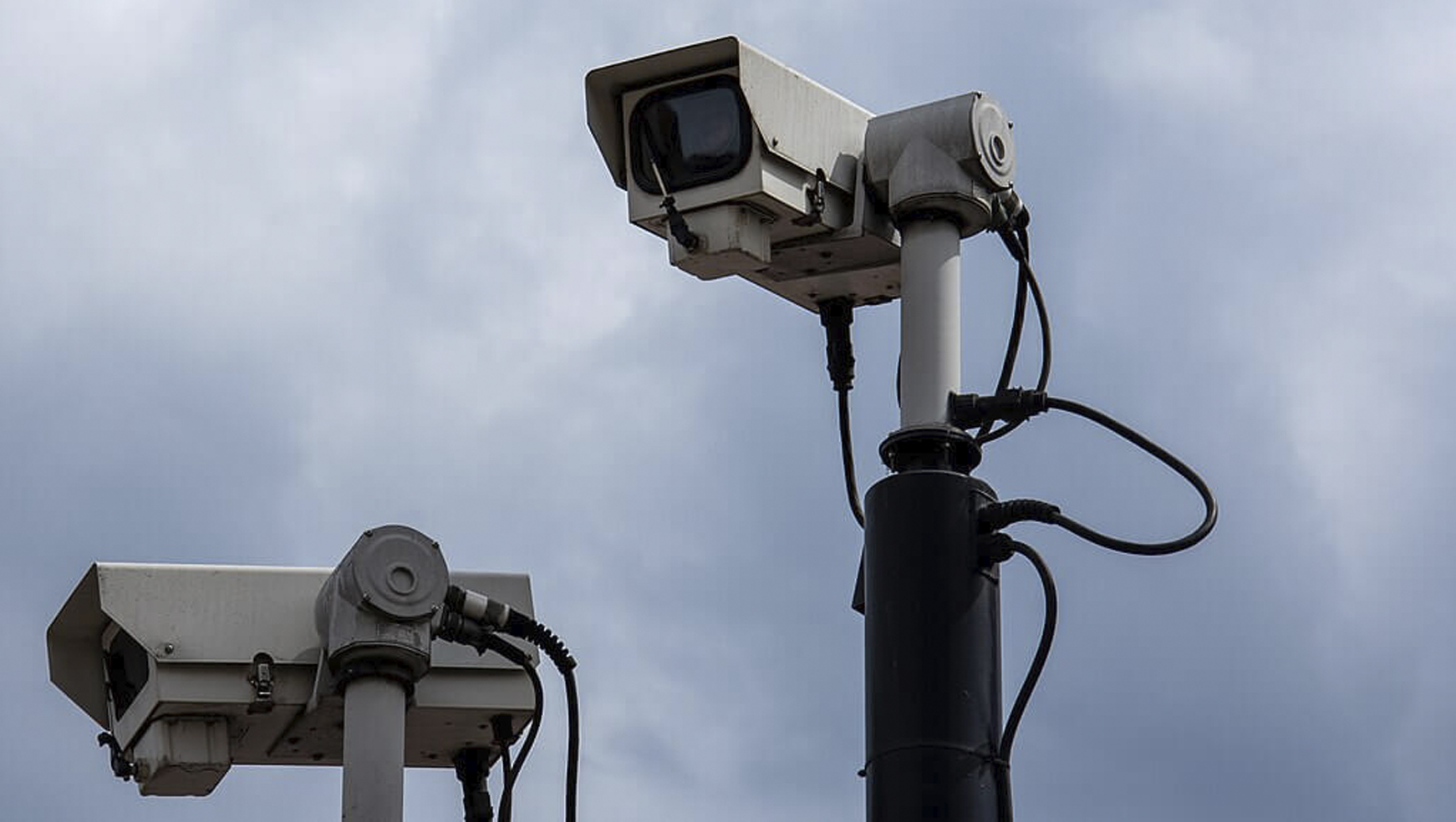
I drive quickly down the highway. A traffic camera flashes and takes our picture.
In this city, there is no air defense, no siren, no shelters. But the traffic cameras work perfectly.
Mr. Cyrus has stacked boxes of bottled water outside his shop. The shelves are full again with bread and canned food. But gas stations still have long lines. My fuel tank is nearly empty, but I am afraid to stop. The bombing might start again, any moment.
And it does. Fighter jets return a few minutes later. Explosions. Tremors. The smell of dust and smoke.
They attack three or four times during the night. Each attack lasts almost an hour. During the Iran-Iraq war, Iraqi planes would come, drop a few bombs, and leave. You knew there would be no more until the next day. Now the attacks keep coming.
All the VPNs stop working. I try them one by one, hoping one might suddenly connect. Nothing works.
Morning missile strikes begin again. I like to ask those who believed military attack was the solution: what do you think now? I admit that sometimes I thought the same thing. That maybe an attack would be better than this endless uncertainty. But now death feels very close. Each time the bombing stops I think: I escaped this time. Next time I may not.
Later one VPN finally connects. On Twitter I see a strange trend: people dancing like Donald Trump. I watch a few clips, then close the app. The explosions remind me: we are not living the same reality.
In the afternoon Goli, who helps me with housework twice a week, calls. She asks if she should come. Day labourers suffer more than anyone in these days. I tell her she can come tomorrow if she prefers. She says, “Who knows if we will even be alive tomorrow?” She comes.
While cleaning the refrigerator shelves her phone rings. It is her brother. Suddenly she collapses onto the kitchen floor and beats her legs with her hands. One of the missiles hit her cousin’s house. Her cousin is dead.
Outside, groups of regime supporters drive through the streets again. Motorcycles and cars carrying Iranian flags. They shout “Allah-o-Akbar” and “Heydar Heydar.” They do not look like mourners. They look like they have just come from a political rally.
These nightly caravans parade through the streets to show their power. A warning to the people behind the windows: keep quiet. If the Leader is gone, we are still here.
The city is full of checkpoints now. Armed men stop every car. Their faces are covered. Strangely, their vehicles all have private license plates, sometimes partly hidden with tape or masks.
By the sixth day of bombing, Tehran is still under heavy attack. The city is quieter, but alive.
This morning I went out to buy milk. In the park a middle-aged man was exercising. Two women were feeding stray cats.
Tehran is frightened and wounded. As if it has jumped from a great height, and is shouting: I am still alive.
In my To Do list, I wrote:
For now there is a war. My plan is to stay alive.