

19 February 2026
Longing for an Ordinary Day - Two Notes from Tehran
Note One
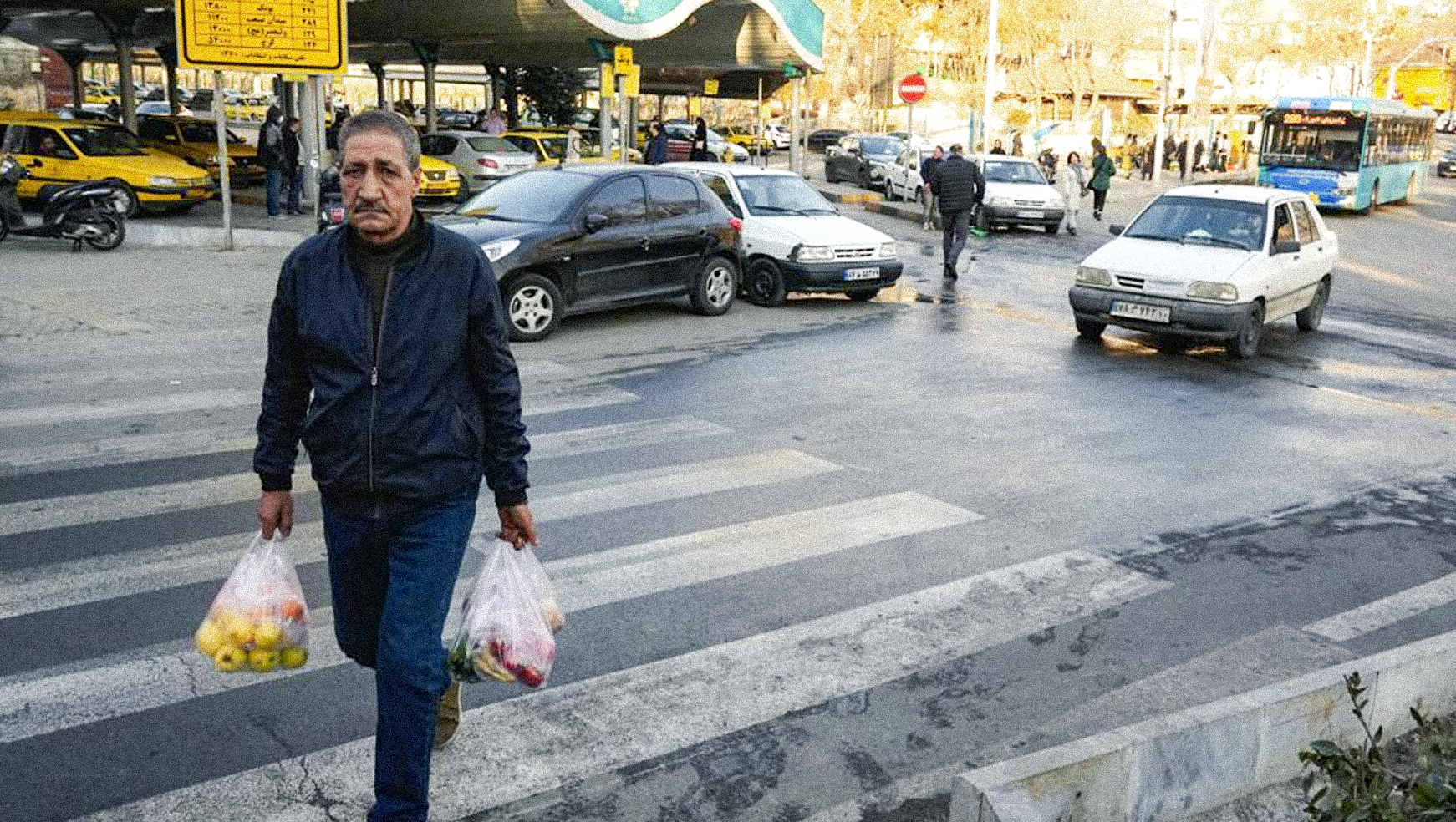
Everything looks normal on surface. Offices are open. Shops are open. People walk the streets as if it were just another day. But it's not. People seem distant. Ordinary life is missing. I try to talk to people, looking for signs of “ordinary life”. But it's hard to find. It's not there.
Reyhaneh is a psychologist. On regular days, most of her sessions are online. I ask her whether, after days of protest and internet blackouts, she feels she has returned to normal life.
“I don’t think I’ll ever return to normal,” she says. “As long as I live.”
She shows me screenshots of the official text messages sent during the days of protest, warning people: if you step outside your home, you will be killed. "These messages are sent by the authorities whose job is to protect people’s lives", she says.
She advised her anxious clients to block those numbers entirely. “A few of them were in a terrible state,” she says. “Whenever the phone lines worked, they would call me in panic. I told some to block the government numbers so they wouldn’t see the messages. I doubt any of us can ever live like ordinary people again.”
Alireza has just married. His wedding ceremony was scheduled for Saturday, January 17. There was no party—just a small legal registration, heavy with sadness. “After two years of planning, we were supposed to have a sweet celebration,” he says. “But I felt so bad I wanted to cancel everything. My mother and my wife’s mother insisted we go ahead and at least sign the marriage papers. They said who knows what might happen later. Which probably means we should expect worse.”
On the day of their wedding, they spent their time calling friends to check who was still alive. Two of them were not. “When you start a life together like that,” he says, “what does ‘normal life’ even mean?”
I meet a family whose young son was killed. His father tells me they had named him Hossein out of love for Imam Hossein. Now, in the name of God and the Prophet, Hossein has been taken from them. At Behesht-e Zahra cemetery, his older brother refused to allow the funeral prayer. Like many other families, they buried their loved one without Islamic rites.
No money was demanded to release his body. But after the burial, someone called. If the family agreed to label their son a “Basij martyr,” money would be deposited into their account. The father says he shouted into the phone and told them never to contact the family again.
But fear has settled into their home. For several days he has not allowed his daughter to attend school—even for exams—afraid something might happen to her. He says nothing is impossible anymore. “My life, my wife’s life, our family’s life—none of it will ever be the same.”
Mohammad-Hassan owns a fruit shop in one of Tehran’s old neighbourhoods. He knows all the locals — and he knows who supports the regime and who opposes it. He asks everyone who comes into the shop what they think about the state of the country.
He is not well. He doubts he will live long enough to see things improve. He is grieving, he says, for the thousands who may have been killed. Fear of war and economic collapse weigh on him. He has noticed something has shifted. “Those Revolutionary Guard families and regime supporters everyone used to fear? Now they’re afraid of everyone. They’ve gone quiet. You don’t see them around.”
Mohsen works at a private publishing house. For now, he says, everything is on hold. “You don’t need to follow the news,” he tells me. “Walk around Tehran for an hour or two. You’ll understand nothing is normal.” The city is covered with banners and posters—more threatening than ever. One shows Abolhassan Bani-Sadr next to Masih Alinejad with the slogan: “A traitor is always a traitor.” He says these posters spread as much fear as masked men on motorcycles.
Anything written on banners in the city unsettles him. During the month of Sha’ban, passages from the Sha’ban prayer are hung across the city.
“In ordinary times, the words in the prayer might seem gentle, even loving. But when I saw them the other day, I found myself searching for hidden warnings—trying to decode what threat might be embedded within them.”
"Nowruz is approaching,” he says. “A few years ago, by now the streets would be busy with New Year shopping. Now there’s none of that Nowruz excitement. Families can’t afford to shop. And no one has the spirit for celebration.”
No one knows what will happen next, but everyone knows this kind of life—this suspended, existence—cannot go on forever.
Note Two
For a long time now, I’ve been walking through fog. I can’t clearly see what lies ahead, and I can barely see what’s behind me. Sometimes I feel as though I’m watching myself from outside myself, detached from my emotions.
In 1997, I had just started school. I still remember spending the last night of the election campaign delivering leaflets door to door with my father, until morning.
In 2001, at the Amjadieh Stadium rally, wearing a headband and wristband that read “Iran for All Iranians,” I cried at every word spoken by the speaker who had survived an assassination attempt, praying our path would continue.
In 2005, I walked every afternoon through the main square of our neighbourhood holding a yellow poster urging people to vote. I stared at them until they spoke to me, and then, with all my teenage passion, I explained why boycotting elections was not the solution.
In 2009, I was voting for the first time. The world felt like it was in my hands. I poured everything I had—into the streets, the university, the campaign office—to protect the flame of hope burning in my chest.
Human chains. The long walk from Enghelab to Azadi. Rallies. Arguments with the undecided and anyone else who could be persuaded to vote for us.
On election day, I served as a candidate’s observer at a polling station in south Tehran. I was so anxious about safeguarding the votes I could barely breathe. I wouldn’t even blink if I could help it.
I followed the mobile ballot box house to house. I worried about the fixed box left unattended. During counting, with the help of a small handbook from headquarters, I managed to reclaim a ballot the Interior Ministry’s observer had declared invalid.
Late that night, I proudly reported that our candidate had won this station. I was shaking with excitement when I reached home. I fell asleep instantly.
When I woke up, my palace of dreams had collapsed.
Perhaps that was when I stepped into the fog.
As the movement disappeared from the streets, I withdrew. I thought I had seen the darkest possible shade of black. I was wrong. There were darker ones still. One tragedy after another.
On January 8 and 9 of this year, I stayed at a friend’s house. On Thursday, on my way there, I saw crowds filling both sidewalks. On my way back, burned motorcycles, torched trash bins, ripped-out railings—and municipal workers clearing the remains like stagehands cleaning up after a performance.
Between it all, scattered chants from apartment windows.
Friday, I walked there and drove back. I saw little more. It was only in the following days—through the stories of residents from other neighbourhoods—that the scale of the disaster became clear.
Since the internet came back, I’ve avoided watching videos as much as possible. I don’t follow the news constantly. I don’t watch news channels at all. I occasionally read fragments of eyewitness accounts and reflections but have trained myself not to remember details.
In my spare hours, I reread familiar books and rewatch familiar films and series. I keep my distance from anyone claiming to have a definitive answer. All the analyses feel nonsensical and misplaced. The responses feel superficial, offered merely to pretend.
In large gatherings, I stay silent. Among close friends, I speak only in generalities. I am sparing what little strength I have to avoid collapsing completely.
I move forward day by day. One question rings constantly in my ears: are we meant to go on longing for one ordinary day for the rest of our lives?