

17 February 2026
When states cannot judge the corrupt: The Case for an International Anti-Corruption Court
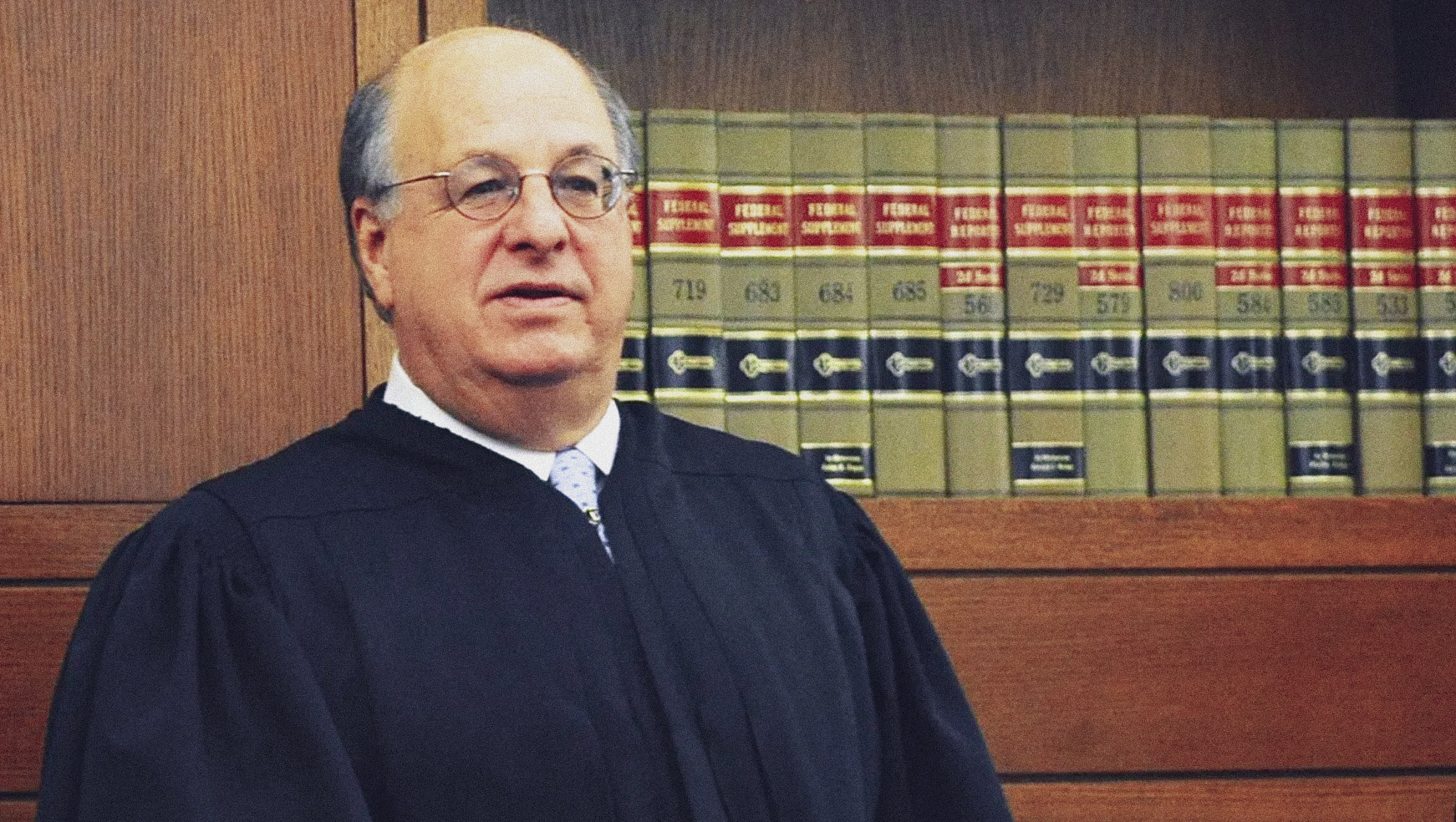
Judge Mark Wolf, in conversation with aasoo
Corruption is often described as one of the greatest obstacles to justice and prosperity worldwide. In countries such as Iran, where corruption is part of the governing structure, who can hold the corrupt accountable? Judge Mark Wolf, a former U.S. federal judge, has spent years advancing an initiative to establish an International Anti-Corruption Court capable of prosecuting grand corruption across borders. In this conversation, we explore what such a court could mean for global justice, and for societies where citizens feel powerless against entrenched corruption.
Judge Wolf, what inspired you to advocate for an International Anti-Corruption Court?
When I was a young lawyer, around 28 or 29, I was an assistant to the U.S. attorney general after Watergate, and that’s when I first encountered the question of how you hold the highest officials in a country accountable for criminal conduct.
Five years later, I was the chief federal public corruption prosecutor in Massachusetts, and we won about forty-five consecutive corruption cases. After that, I became a federal judge and handled major corruption cases. For instance, in 2012 I sentenced the Speaker of the House’s chief of staff to eight years in prison for demanding bribes.
Starting in 1990, I began traveling around the world at the invitation of American ambassadors, often to Egypt, Turkey, China, the Czech Republic, Slovakia, and eventually Russia. In every country I visited, I spoke about the role of a judge in a democracy, about human rights issues, and particularly about how to combat corruption. What I saw was that nearly all of these countries were ruled by corrupt leaders - kleptocrats who were also among the worst abusers of human rights. They enjoyed impunity in their own countries. They violated the law, including their own anti-corruption laws, but they had impunity because they controlled the police, the prosecutors, and the courts.
From my experience, I knew that in the United States we do not often prosecute corrupt state and local officials in state courts. The states often lack the right laws. They lack the capacity to conduct complex financial investigations. And the prosecutors are elected - they are part of the political establishment. Instead, we rely on federal prosecutors and federal courts to handle those cases.
So, it occurred to me that what was needed on the international scale, was a counterpart to the federal courts in the United States. An international anti-corruption court. That would be a forum of last resort for high officials of countries that were unwilling. And corruption is often a transnational crime. It's axiomatic that usually corrupt officials don't want to keep the
proceeds of their corruption in their own country and they launder it through shell companies and other devices around the world. And since it's a transnational problem with transnational consequences, there's a substantial justification and legal basis to have an international anti-corruption court.
You mentioned major corruption. How would you define major corruption, and why do national systems so often fail to address it?
This isn’t a legal definition, but we define major corruption as the abuse of public office for private gain by a nation’s leaders. Around 186 countries are parties to the United Nations Convention against Corruption. Under that treaty, they all have obligations to criminalise five categories of offences: bribery, misappropriation of public resources, embezzlement, obstruction of justice, and money laundering.
But, as I mentioned earlier, the kleptocrats who rule some of these countries can violate such laws with impunity because they control the police, prosecutors, and courts. They will not permit honest or effective investigations of their friends, close associates, family members—or themselves. That is why an International Anti-Corruption Court is needed.
So, could you briefly explain how this international Anti-Corruption Court would work?
The court as we now conceive it, and it's an evolving concept, would have a criminal chamber which was the origin of the idea and now it's evolved to also have a civil chamber, and an asset division. The asset division would focus on seizing, freezing, repatriating or repurposing illicit assets and resolving disputes over who's entitled to those assets. But I'll focus on the criminal aspect. There's now a draft treaty for the court that's recently been completed with contributions from more than 70 international criminal law experts, judges, defense lawyers, prosecutors, scholars and others. The draft is out for comment by a number of countries and non-governmental organizations.
In general, the idea is that the court would be an independent body. It would not be established through the United Nations. The UN operates on consensus. It's got the Security Council that can veto anything and almost anything. And you have China and Russia, among others, on the Security Council. It would be a difficult and impossible project probably, if it is part of the UN. We have this treaty draft and it'll be refined once we get views from many countries and organisations and individuals. Then there would be multilateral and bilateral negotiations to get countries to sign the treaty.
Right now, the Netherlands, Canada, Nigeria, Moldova have formally declared support for the
court. The UK Foreign Minister, said very clearly, when he was Shadow Foreign Minister, that if the Labor government came into office they would advocate for the creation of this court and we're working with them closely on it. There's also tremendous interest in the idea in Africa.
So that's the way it would come into existence. Prosecutors could initiate prosecutions; there would be expert investigators - people who have experience, expertise in investigating transnational crimes, financial crimes including corruption; there would be expert prosecutors; there would be impartial judges. The court would have jurisdiction over at least the five crimes required by the UN Convention against Corruption, and potentially others. It would prosecute officials and their co-conspirators when national systems are unable or unwilling to do so. The court would serve as an incentive for countries to improve their own performance in order to keep their officials outside the jurisdiction of the International Anti-Corruption Court.
We can assume that corrupt states are going to resist this court and are not going to cooperate with it. So how do you envisage enforcing the ruling of this court?
Yes, usually the question comes up, how are you going to prosecute these officials because they're not going to let their countries join the court? That's the threshold question. It's axiomatic that countries like China and Russia won't probably join this court, but their corrupt officials move a lot of their illegal funds out of their country.
What would prevent this court from becoming politicised or selective, like some other international bodies, that critics claim exercise double standards?
Well, a lot of that depends on two things here. Let me make this more concrete. One question that we commonly get is that the International Criminal Court has focused excessively on Africans and that's not fair and shouldn't we worry that the International Anti-Corruption Court will do the same? The response to that in part is that the International Criminal Court has jurisdiction only over war crimes, crimes against humanity and genocide. And those are crimes that, when the court came into existence, were occurring primarily in Africa and more African countries had joined that court and actually referred many of the cases to it. But any investigation or prosecution by that court can be vetoed by the UN Security Council. So, if they want to start an investigation or prosecute officials of North Korea, China can veto that. With regard to the International Anti-Corruption court, this grand corruption occurs all over the world. There would be no reason to single out one region.
And a key point is that it has to be a prosecutable case. For example, you can't charge somebody just because you believe he/she's guilty. You can't charge them unless you believe you have enough evidence to prove that charge beyond a reasonable doubt. So, if you have proper standards and you have prosecutors who follow them they should be bringing meritorious cases and they shouldn't be singling out any one part of the world.
For citizens of countries like Iran where corruption is systematic and very much tied to political power what practical difference could this court make?
The goal of any prosecution in my view as a former prosecutor, as a federal judge, is not just to convict and lock somebody up, but to generate reform. Throughout the world people, especially young people who are very courageous and enthusiastic, are potential supporters of the International Anti-Corruption Court. Many people are not apathetic about corruption. They're just unsure whether anything can be done about it. When you have the first successful conviction, it may just confirm people's doubts - "they're all corrupt", people would say, ..."look, it's been proven our leader is corrupt". But then it also begins to show that something can be done about corruption.
And I think successful prosecutions whether through the political process or through protests can ignite change. For example, this is going on in Serbia now. The indignation at corruption has got innumerable young people going to the streets.
So, is the idea partly to name and shame corrupt officials and influence public opinion to bring pressure on them?
Well, it's to do more than naming and shaming. These people are usually shameless. You can name them. You can make a long list of names, but you're not going to shame them into changing their conduct. They're shameless but they are afraid of getting locked up. This is the fundamental principle of a criminal law, that people are less likely to do bad things if there are going to be severe consequences. Not that you get named and shamed, not that when things go bad, you leave and you live in your mansion in Paris or London or New York, but that you get put in prison.
You mentioned people's doubt, by and large international courts often move very slowly and it costs a lot. So why should ordinary people believe that this court will deliver real justice?
Well one of the criticisms of the International Criminal Court particularly is that it's very expensive and hasn't produced much. But there are a lot of lessons to be learned from experiences in the last 25 years. Justice Richard Goldstone from South Africa who was the first prosecutor for the International Criminal Court for the former Yugoslavia, then Rwanda. and chairs the advisory committee to the International Criminal Court, did an investigation a couple of years ago and came up with aabout 600 recommendations to improve that court.
One of them is that you need judges who are capable of presiding and deciding quickly and decisively in complicated cases. And it can go faster, and we believe that the International Anti-Corruption Court could be effective with much less money than the International Criminal Court.
Once it's up and running, and when people are getting convicted, the court can be financed, to some measure through fines that would be imposed on the convicted kleptocrats. They'd be ordered to go to prison. They'd be ordered to pay restitution, and they'd be ordered to pay fines.
How would you respond to critics who say that this idea basically signals the failure of national sovereignty and domestic justice?
Well, in one sense it does, because as I said 186 countries are parties to the UN convention against corruption and all the studies say the problem doesn't come from not having the right laws on the books. The problem is that they're not enforced.
But this court would give countries an incentive to enforce their own laws to make sure their officials wouldn't be vulnerable to prosecution in the International Anti-Corruption Court. And the expert investigators, prosecutors, and judges can help countries that want to do better. For instance, in the case of Moldova, several years ago I was on a program on the Munich Security Conference with the then new president of Moldova, Maia Sandu. She said, "I'm the president. I now see that my predecessors have taken billions of dollars illegally and moved it out of the country, but we don't have the capacity to follow the money or to prosecute those formidable cases. I spoke about Integrity Initiatives International and what was being done to help Ukraine strengthen its capacity to combat massive corruption in its judiciary. And I talked about the International Anti-Corruption Court. She said, "come to Moldova." This was right before the Russian invasion.
Most of the ideas around the International Criminal Court, is north to south. In other words, northern countries pushing others to do what they think. This particular court is coming from
Africa and really the African nations are saying we need this. It's coming from countries that really feel the impact of corruption and they're pushing the the northern countries to adopt this.
At this stage, what needs to happen critically for the court to become a reality?
Well, in the last two or three months we've distributed the first draft of the treaty to many
countries and to non-governmental organizations. There are many non-governmental organsations that are interested in supporting the court but we haven't really put together a coalition with a well- organised active campaign, because we have limited resources - human resources and financial resources although they're growing but not fast enough.
We are hoping that in the next year, realistically we will get views from all these countries and non-governmental organisations, to improve the treaty. And at the same time, we will be launching a more organised campaign with partners. And then there are other NGO's around the world that are interested and can lobby their countries to join this court. We will also have bilateral meetings with potentially interested countries.
We are hopeful that two years from now there'll be a number of countries to create the court because the court could be initially created with a relatively small number of countries as long as they come from around the world - the global south as well as the north. It can't be just a western initiative, where the global north prescribes for the south to follow.
Is the US government likely to support it, or at least not obstruct it?
No, in the current administration, I think there is not much hope. But the position of the United States can be something of a double-edged sword. Even in the Biden administration and the Obama administration while there were many officials who in their personal capacities would support this, they wouldn't support it officially. In part because they didn't want to fight with the Republicans over it. But many European ambassadors and others said, from our perspective, it's okay that the US doesn't support this. We're tired of taking direction from the United States. Europe should be leading on many of these issues and the Africans are emerging as leaders.
So, from my perspective, as an American, I think certainly the United States should support this court but I don't predict that will happen, in this administration at least.
Are you looking for a powerful and influential country to champion it or is it a more collective approach?
It's both. It's primarily collective. But the UK is very important. It is a G7 country. It's one of what's called the "Five Eyes", that was established ten years ago. I played a small role in the international anti-corruption coordination center and it has the US, Canadian and British investigators, as well as Australia and New Zealand. And then there are others such as Singapore, and they facilitate international financial investigations and they've been having some major successes in getting evidence. But ultimately you need the court to present the evidence to, and that's a challenge in many of these cases.
Thinking about Iran, it's very unlikely that it will join the the Anti-Corruption Court, so could individuals or NGOs and the civil society still bring cases?
They couldn't formally bring cases, they could bring evidence that could trigger cases. That's a proposed feature of this court - there are whistleblowers and they're courageous and I've met
some of them around the world. They develop evidence that could be used in a criminal prosecution, but they can't use it in their own countries because the courts are corrupt and take direction from the officials. But citizens and civil societies could bring evidence to the criminal chamber, and trigger a criminal investigation and prosecution.
There is a False Claims Act, in the United States, where if somebody who has confidential
information about fraud on the US government, they can bring it in a case, filed in a United States District Court, and either the Department of Justice takes over the case, and then if it settles or the Justice Department wins the case, the whistleblower gets a percentage of the recovery. I don't know that this could work in the International Anti-Corruption Court, but this has recovered billions of dollars in the United States, and could potentially be a valuable tool.
So, people from countries that are very corrupt, can collect and present the evidence, and trigger
action that can't and won't be taken within their own country.
Do you see corruption as a global security threat not just a domestic problem?
Absolutely. This grand corruption is a threat to international peace and security. It's one of the
main justifications for the International Anti-Corruption Court. I don't like to keep going back to the Russian example, because there are many examples, but in 2014 you had the Maidan revolution in Ukraine and it was triggered in meaningful measure by indignation of the president
Yanukovych's extravagant corruption. So, he flees and goes to Russia. Then Russia takes Crimea, right after Yanukovych is driven out, and Crimea was essentially a base to launch
the invasion into Ukraine which is an existential threat to Ukraine.
Shortly after the invasion in 2022, Gordon Brown, the former prime minister of the UK got in
touch with me and said, "I've been following the proposal for the International Anti-Corruption Court. It's very important. I want to publish an article." I gave him some information, and he published an article and argued that we need this court to stop Putin.
I did a BBC hard talk interview, in 2022 or 2023. After I did it, I heard from Barham Salih, the former president of Iraq. He said, "I think this is a very important initiative. The United States
doesn't understand how many millions of dollars have been lost to grand corruption in Afghanistan and Iraq. How many American soldiers have died because of this and how this undermines every effort to promote democracy in this part of the world.
You know, although I'm old (79), I hang around with a lot of young people. A lot of older people are probably cynical. They just think this is an inevitable way of life. But the young people are more idealistic and are risking their lives around the world because they don't accept it as inevitable. And things happen because young people or people who are courageous even if they're not so young anymore, are willing to try to do something.
Havel wrote succinctly and beautifully about the velvet revolution in Czechoslovakia, as it was at the time. He said, first the young people went to the streets and their parents didn't want them to go. They knew it would be dangerous, but the young people were determined. And so, the parents went to the streets to protect their kids. And then they got tear gassed too. And then they got radicalised. And all of a sudden, the Soviet empire that seemed like it had been constructed to last forever collapsed very quickly.
Like apartheid in South Africa, Mandela said, it's always impossible until it happens.